Sometimes the best thing you can do in Waikiki is skip the beach for a morning. The Honolulu Zoo is a 5-minute walk from the sand, and for families with kids, it's one of Oahu's easiest and most rewarding outings.
🦁
The Zoo at a Glance
The Honolulu Zoo sits on 42 acres at the Diamond Head end of Waikiki, right next to Kapiolani Park. It's home to over 1,200 animals representing species from Africa, Asia, the Pacific Islands, and the Americas. For a city zoo, the grounds are surprisingly lush — mature tropical trees, open-air enclosures, and a layout that feels more like a botanical garden with animals than a concrete zoo.
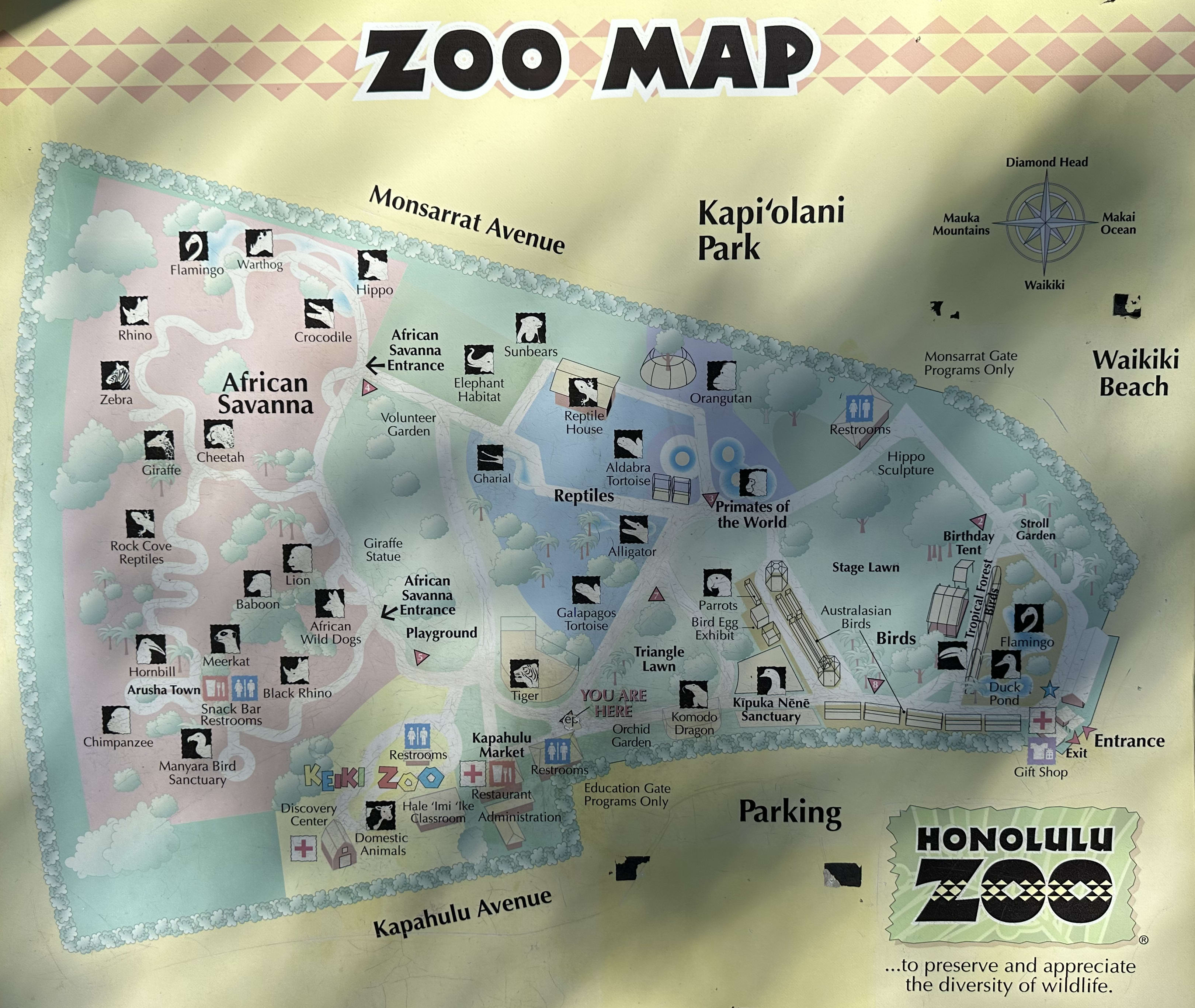
The zoo is divided into three main zones: the African Savanna (the largest section, with giraffes, zebras, rhinos, hippos, and lions), the Tropical Forest (primates, reptiles, and birds), and the Pacific Islands section (native Hawaiian species and island wildlife). A full loop takes about 2–3 hours at a casual pace, longer if you stop at every exhibit with curious kids.
Map of the Honolulu Zoo
Quick facts
📍 151 Kapahulu Ave, Honolulu⏰ Open daily 10 AM – 3 PM (last entry 2 PM)🎟️ Adults $19 · Kids (3–12) $11 · Under 3 free🅿️ Free street parking on Kapahulu & Monsarrat🌴 42 acres · 1,200+ animals⏱️ Allow 2–3 hours for a full visit
🧒
The Keiki Zoo
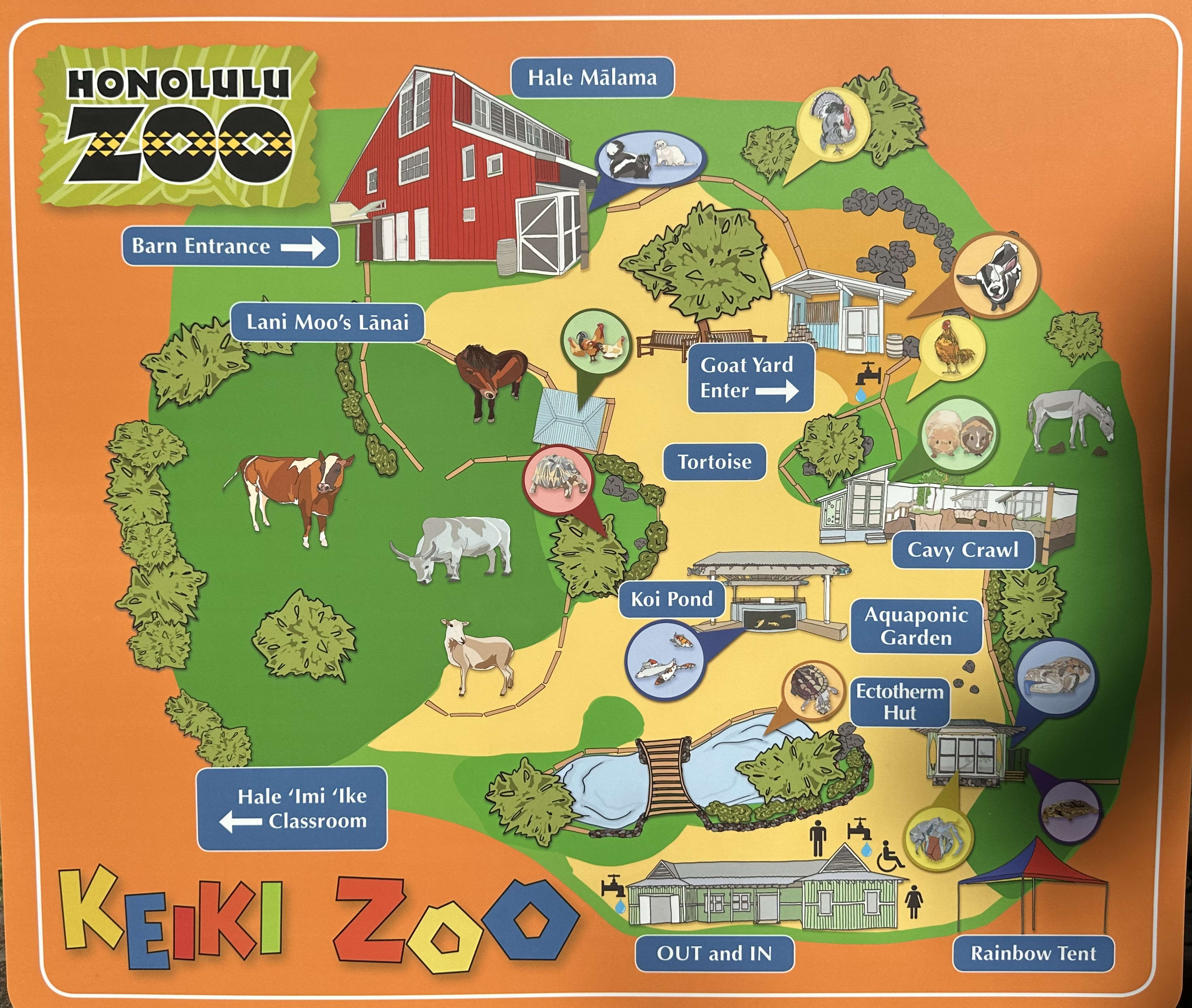
"Keiki" means child in Hawaiian, and the Keiki Zoo is the interactive petting area designed for the youngest visitors. It's tucked away in its own section near the center of the grounds, and for kids under 6 or 7, it's often the highlight of the entire visit.
Here, children can get close to goats, sheep, pot-bellied pigs, and rabbits in a supervised open area. There are also small enclosures for chickens, ducks, and guinea pigs. The animals are gentle and used to being touched, and zoo staff are always nearby to help kids interact safely.
Map of the Keiki Zoo
•Hands-on animal encounters.Kids can pet and gently touch goats and sheep — a rare experience that most city zoos don't offer as openly.
•Keeper talks.Short educational sessions happen throughout the day where staff introduce animals, explain their diets, and answer questions. Great for curious kids who won't stop asking "why?"
•Shaded and compact.The Keiki Zoo is small enough that you won't lose sight of your kids, and there's plenty of shade from the surrounding trees. A calm spot to regroup mid-visit.
🦏
Must-See Animals
With over 1,200 animals, you can't see everything in one visit — and you don't need to. Here are the exhibits that consistently get the biggest reactions from families:
African Rhinoceroses
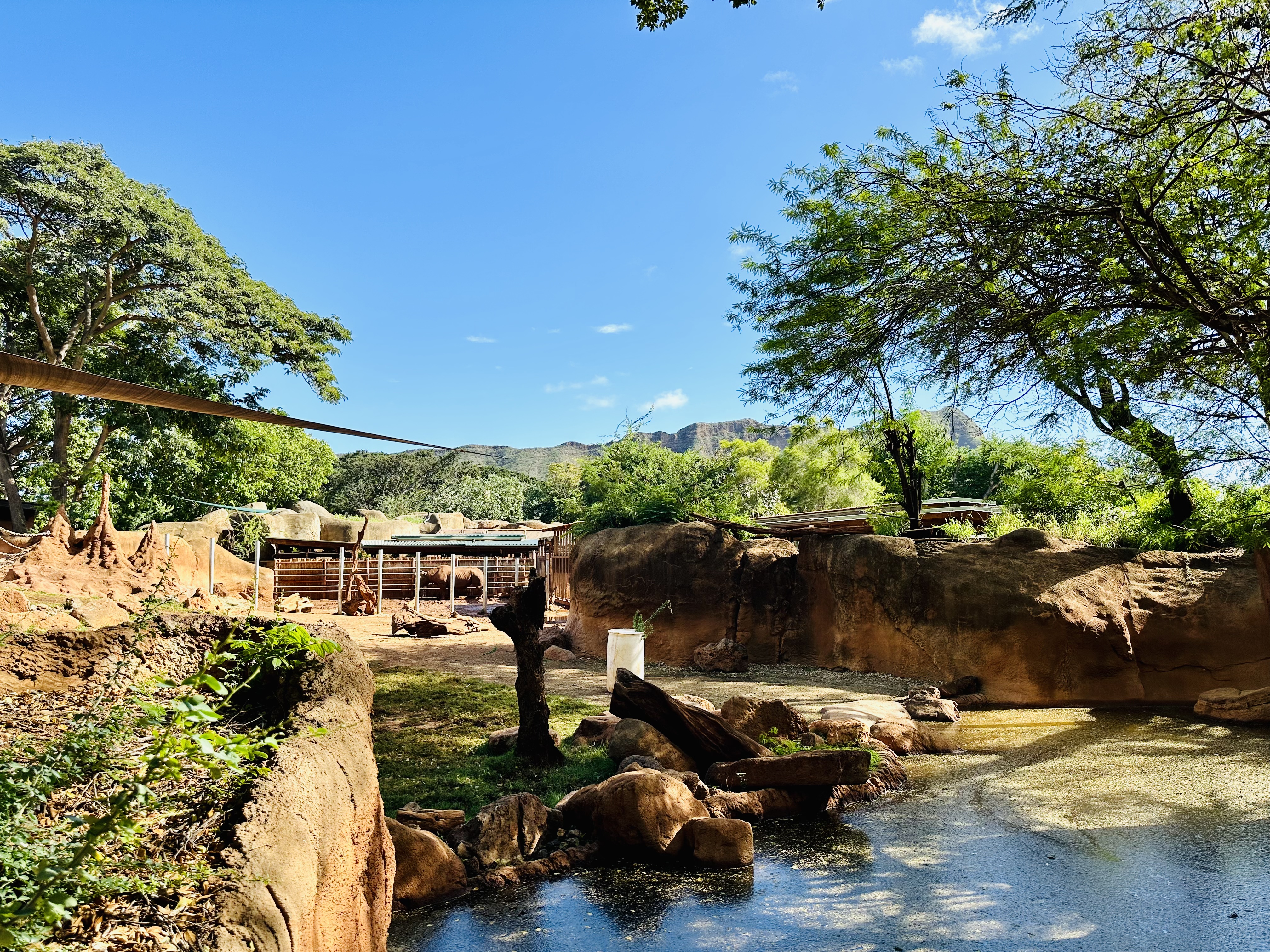
The rhino enclosure is one of the zoo's signature exhibits. The Honolulu Zoo houses both black and white rhinoceroses in a large, open-air reserve designed to mimic the African savanna. Watching these massive animals graze from just a few meters away is genuinely impressive — kids (and adults) tend to stand at the fence for a long time.
Rhinos at the Honolulu Zoo
Giant Tortoises
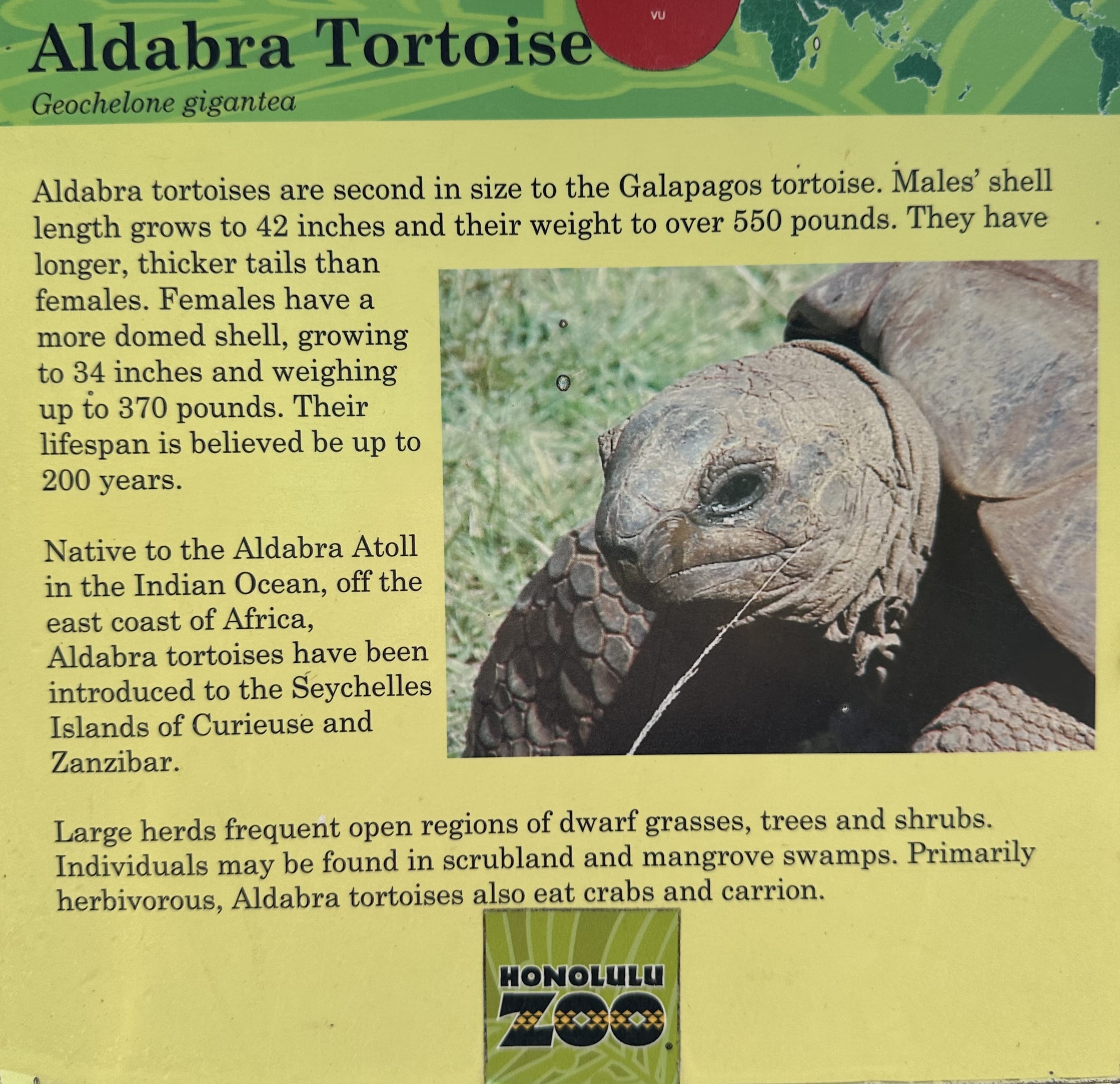
The zoo is home to Aldabra and Galápagos giant tortoises — ancient creatures that can live well over 100 years. They move slowly, eat deliberately, and have a quiet dignity that fascinates kids and adults alike. The enclosure lets you get quite close, and you'll often see them munching on leafy greens or simply basking in the sun.
Giant tortoise at the Honolulu Zoo
Fair warning: giant tortoises are, uh, not shy about their mating behavior. If you happen to visit during the right season, you might catch them in the act — complete with surprisingly loud vocalizations. The kids will have questions. Good luck.
Giant tortoise mating at Honolulu Zoo — you've been warned
Other Highlights
•African elephants. The largest land animals on earth, and the Honolulu Zoo houses them in a spacious enclosure with a pool. Feeding times are the best moments to watch.
•Komodo dragon.The world's largest living lizard. The Honolulu Zoo's Komodo dragon enclosure is one of the more dramatic exhibits — these animals are prehistoric-looking and surprisingly alert.
•Chimpanzees. Playful, loud, and endlessly entertaining. Kids can spend 30 minutes watching the chimps interact without getting bored.
•Nēnē (Hawaiian goose).Hawaii's state bird is endangered, and the zoo participates in breeding programs. A chance to see a species you won't find in any mainland zoo.
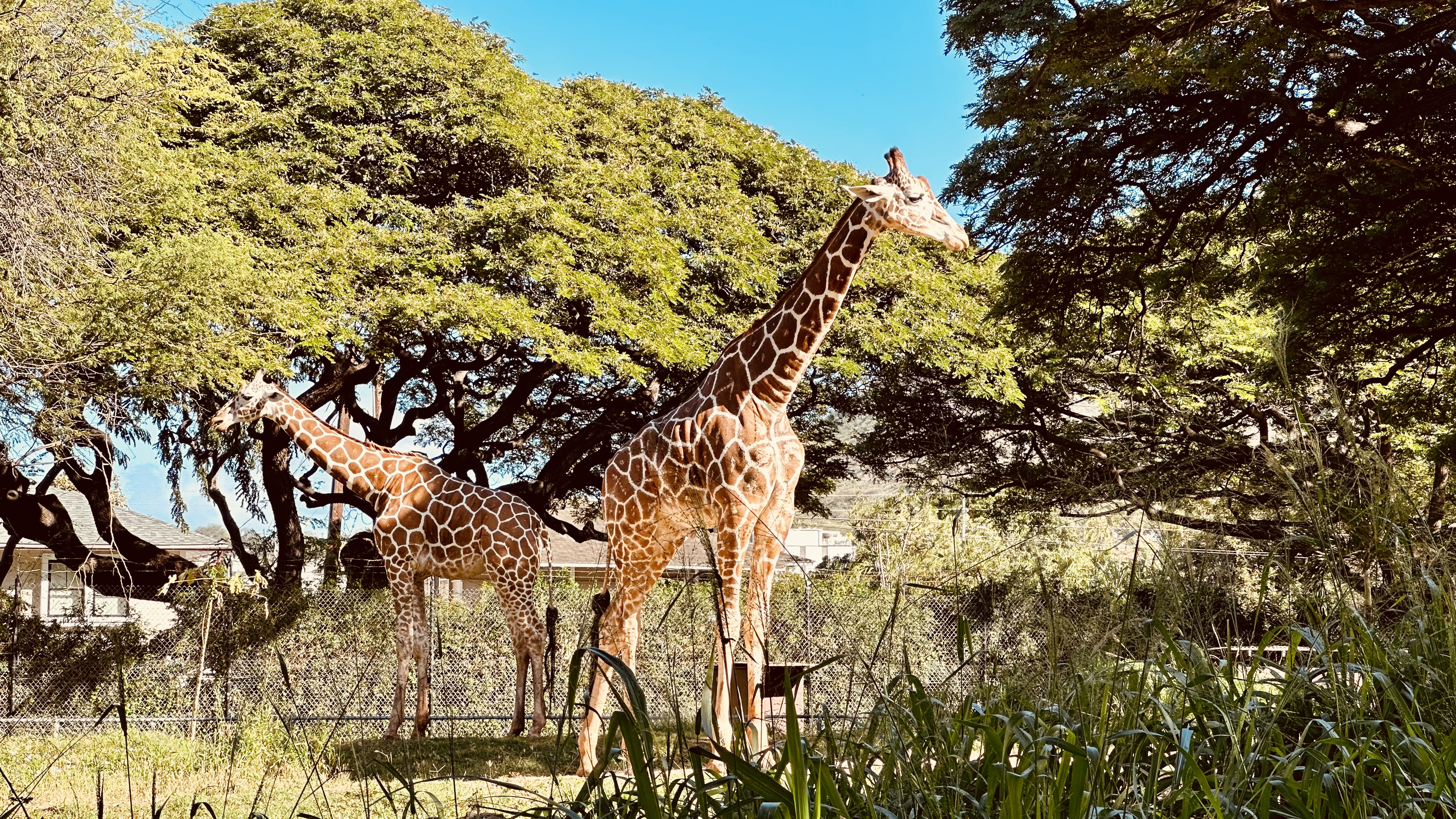
•Giraffes.The giraffe exhibit is at the far end of the African Savanna loop. On a good day, they'll walk right up to the fence. Easily one of the best photo opportunities in the zoo.
💡
Visiting Tips
A few things we've learned from multiple visits that'll make your day smoother:
•Go early.The zoo opens at 10 AM, and the first hour is the best — animals are most active, it's cooler, and the crowds haven't arrived yet. By noon, both the animals and the kids start wilting in the heat.
•Bring a stroller. The grounds are flat and paved, making it stroller-friendly throughout. Even older kids appreciate having a ride option when they hit the wall around hour two.
•Sunscreen and hats.Parts of the zoo have good shade, but the savanna section is wide open. Apply sunscreen before you enter — you'll forget once the kids spot the first animal.
•Weekday mornings are quietest. Weekends and school holidays bring larger crowds. If you have flexibility, a Tuesday or Wednesday visit is noticeably calmer.
•Check for special events.The zoo hosts "Twilight Tours" on select evenings, letting families explore after hours with a guide. They also have seasonal events around the holidays. Check the Honolulu Zoo website before your visit.
•Combine with Kapiolani Park.The zoo borders Kapiolani Park, which has a huge open field, a bandstand, and views of Diamond Head. After the zoo, let the kids run around on the grass — it's the perfect wind-down.
🍽️
Food & Drinks
The zoo has a small snack bar near the center of the grounds with the usual suspects: hot dogs, shave ice, chips, and cold drinks. It's fine for a quick refuel, but the real food options are just outside:
•Diamond Head Market & Grill. A 5-minute drive up Monsarrat Avenue. Excellent plate lunches, loco moco, and their famous blueberry scone. A local favorite — go before 11 AM or expect a line.
•Bogart's Café. Also on Monsarrat, right near the zoo. Great açaí bowls, pancakes, and smoothies. Perfect post-zoo brunch spot.
•Pioneer Saloon. Casual Japanese-style plate lunches just up the street. The garlic ahi and katsu curry are both excellent. Kid-friendly portions available.
•Bring your own. Pack a cooler and picnic in Kapiolani Park after. There are benches and grassy areas with shade right outside the zoo exit. Probably the most relaxing option with small kids.
🚗
Getting There
The zoo is located at 151 Kapahulu Avenue, right at the intersection with Kalakaua Avenue in Waikiki. Getting there is straightforward:
•Walking.If you're staying in Waikiki, the zoo is probably within walking distance. It's at the Diamond Head end of Kalakaua Avenue — about a 10-minute walk from most Waikiki hotels.
•By car.Free street parking is available on Monsarrat Avenue and surrounding streets, but it fills up fast on weekends. There's also metered parking along Kapahulu. Arrive by 10 AM for the best spots.
•TheBus. Routes 2, 8, 13, and 42 all stop near the zoo. The closest stop is right on Kapahulu Avenue at the zoo entrance. A single ride is $3.00 (day pass $7.50).
•Biki bike share.There's a Biki station right outside the zoo on Monsarrat Avenue. If you're coming from Waikiki without kids, it's a fun 5-minute ride along the park.
The Honolulu Zoo is open daily from 10:00 AM to 3:00 PM (last entry at 2:00 PM). Admission is $19 for adults and $11 for children ages 3–12. Kids under 3 enter free. For the latest hours and special events, visit honoluluzoo.org.